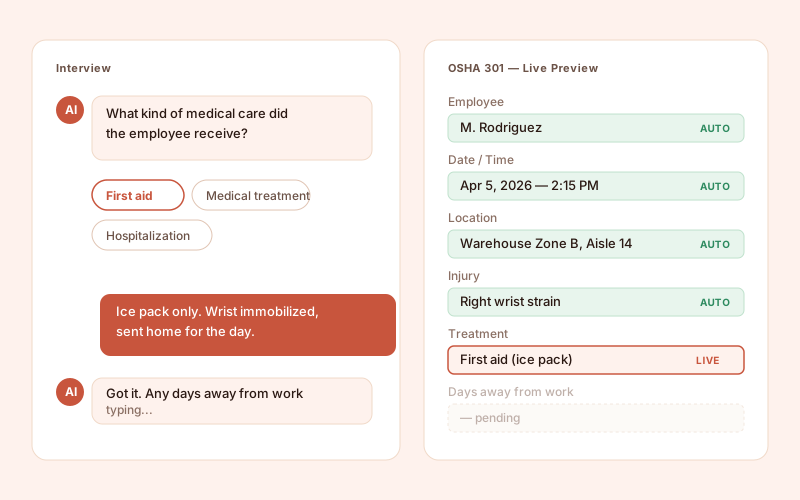
A conversation, not a form
Describe the incident. The AI asks the right follow-ups — injury type, treatment, what people were doing — while OSHA Form 301 fills in alongside. No fields to hunt for, no forms to memorize.
Generate the OSHA Form 301 plus the four investigation documents inspectors, insurers, and attorneys all expect — in 5 minutes. Answer the questions, get the package.
Be ready before the next incident.
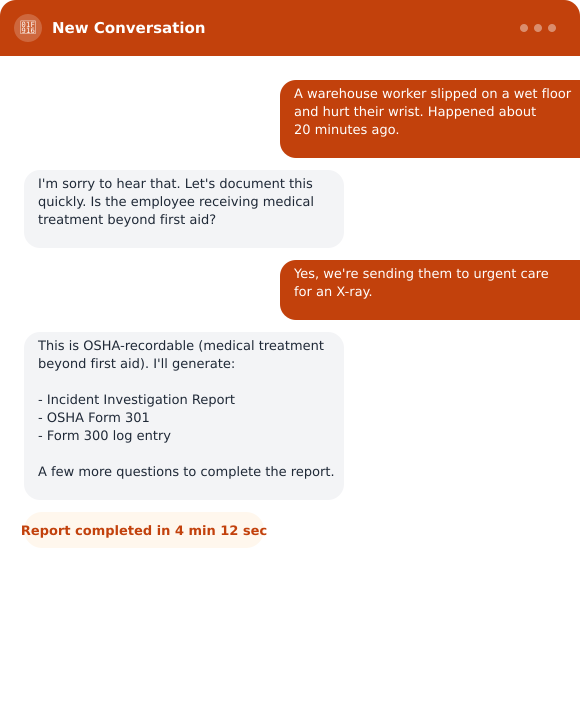
A workplace injury just happened. You're dealing with the immediate crisis — getting the employee help, securing the area, calming everyone down. The last thing you want to think about is paperwork.
But the clock is ticking. OSHA requires documentation within specific timeframes. Your insurance company needs an incident report. HR needs details for workers' comp. And if you don't capture what happened accurately while memories are fresh, you're exposed.
Most small businesses either:
Core Features
Describe what happened in plain language. We do the OSHA work — and the investigation behind it.
Describe the incident. The AI asks the right follow-ups — injury type, treatment, what people were doing — while OSHA Form 301 fills in alongside. No fields to hunt for, no forms to memorize.
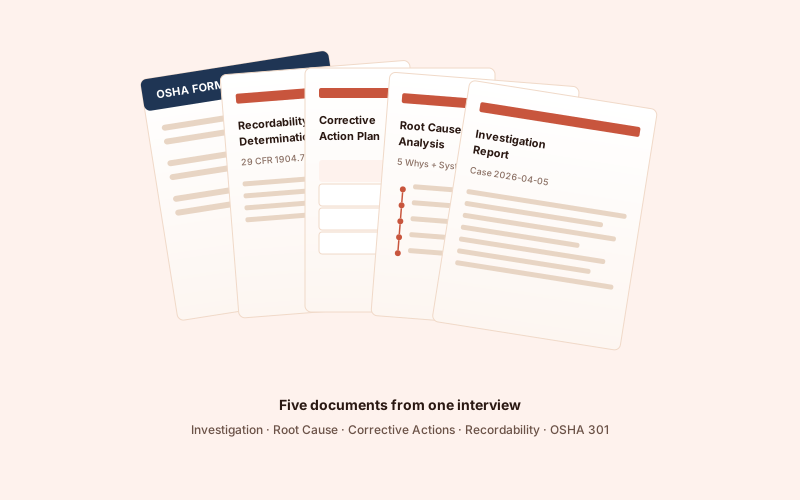
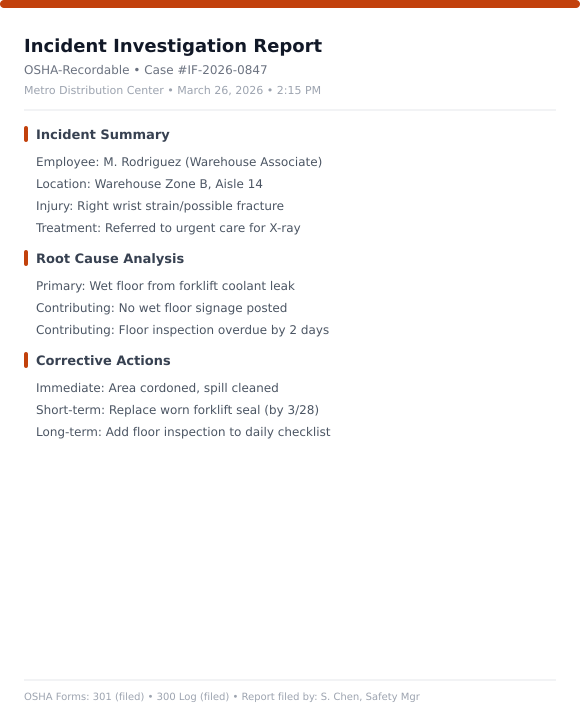
An investigation report, root cause analysis, corrective action plan, OSHA recordability determination, and a pre-filled OSHA Form 301. All formatted, all defensible, all ready to file or share.
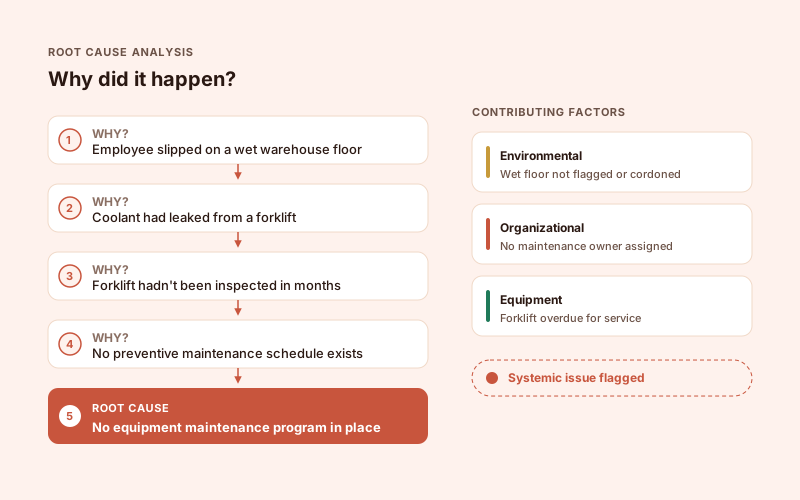
We don't stop at "employee slipped." The analysis runs the 5 Whys, classifies contributing factors, and flags systemic issues — the kind of investigation a regulator or insurer expects to see.
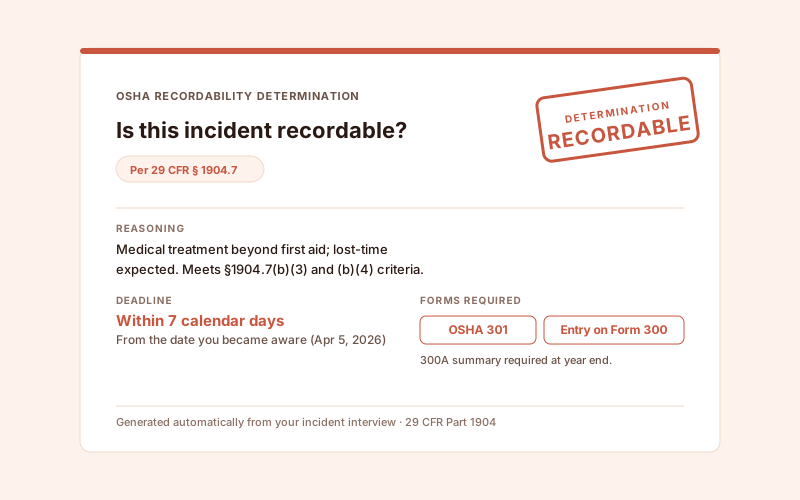
Is it recordable? You get a formal determination memo citing the exact 29 CFR sections, the reporting deadline, and which forms apply. No guessing. No "I think we're fine."
When a workplace injury or illness occurs, employers have specific obligations under OSHA (Occupational Safety and Health Administration) regulations. Understanding these requirements is critical — violations can result in fines up to $16,550 per incident for serious violations, and $165,514 for willful or repeated violations.
Everything you need to know about the platform.
OSHA Form 301 is the Injury and Illness Incident Report. It's a detailed record of a single workplace injury or illness, capturing how the incident occurred, what the employee was doing, the object or substance involved, and the nature of the injury. Employers must complete a Form 301 (or equivalent) within 7 days of learning about a recordable injury. The form is kept on file for 5 years.
You must report to OSHA within 24 hours if an incident results in: hospitalization of one or more employees, amputation, or loss of an eye. Fatalities must be reported within 8 hours. These reports are separate from your recordkeeping obligations — you must actively notify OSHA by phone or online, not just complete the forms.
This distinction determines whether an injury is OSHA-recordable. First aid includes things like bandages, non-prescription medication, tetanus shots, and wound cleaning — these don't require recording. Medical treatment includes prescription medications, sutures, physical therapy, and most treatments given by a physician — these must be recorded. The full list is in OSHA's recordkeeping regulation (29 CFR 1904).
Employers must retain OSHA Forms 300, 300A, and 301 for 5 years following the end of the calendar year they cover. During this period, you must update the forms if the outcome of a previously recorded case changes (e.g., an employee who returned to work later requires restricted duty).
Employers with 10 or fewer employees are exempt from routine OSHA recordkeeping requirements (but must still report severe injuries and fatalities). Some industries are also exempt, including retail, finance, insurance, and certain service businesses. However, all employers must comply with OSHA safety standards — exemption only applies to the paperwork requirements.
As of 2024, OSHA can assess penalties of up to $16,550 per violation for serious, other-than-serious, and posting violations. Willful or repeated violations can reach $165,514 per violation. Failure to report a fatality or severe injury is a separate violation. Penalties are adjusted annually for inflation.
Be prepared with documentation that protects your business and your people.